




Balance shapes how we understand what we see. In art, architecture, and cosmetics, proportion helps the eye move comfortably across a design without stopping or searching for order. When elements relate to one another in a clear way, the result feels settled and natural, even if you cannot immediately explain why. The same thing happens when we look at a face. Our eyes travel from one feature to the next, forming an overall impression rather than a checklist of details. Small differences can add personality, while larger imbalances may pull the focus in a way that feels distracting rather than intentional. In aesthetic medicine, the same principles of proportion and symmetry guide treatment planning. So, what is facial balancing?
In aesthetics, facial balancing refers to a non-surgical method to improve facial harmony by adjusting proportions and contours rather than altering individual features.
Typical Goals of Facial Balancing
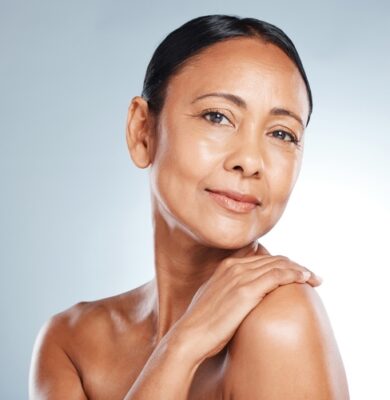
One of the most common goals in facial balancing is improving symmetry. Nearly everyone has natural differences from one side of the face to the other. One cheek may sit slightly lower, one side of the jaw may appear stronger, or the lips may rest at different heights. These variations are normal and part of what makes a face unique.
Facial balancing looks at those differences in context. Rather than attempting to make both sides identical, the focus remains on supporting the less well-defined areas, so the face appears more even overall.
Another goal is restoring proportions that tend to shift over time. Aging alters the distribution of volume across the face. The midface may flatten, the temples may hollow, and the lower face may appear heavier or less defined. Facial balancing considers how the upper and lower face interact. Supporting areas like the cheeks, temples, chin, or jaw can help re-establish a sense of structure, so the face feels balanced again. The intention is not to recreate a “younger version” of the face, but to help features relate to one another in a way that feels refreshed and appropriate for that person.
A third goal of facial balancing is to help the face appear more visually connected. When there are sharp changes between areas of the face, such as a deep fold, hollow, or shadow, the eye tends to stop there. That can make certain features stand out more than intended. Softening those transitions allows the eye to move more easily across the face, from the forehead through the cheeks and down to the jaw and chin. When everything connects smoothly, the face often looks more balanced.
How Facial Balancing Works
Facial balancing uses injectable treatments to help refine proportion, support structure, and soften tension across the face.
Dermal Fillers
Dermal fillers are gel-based fillers injected beneath the skin. We use them to restore or support volume in areas that have flattened over time, such as the cheeks, temples, or under-eye area. By rebuilding underlying support, fillers can soften lines and folds by lifting the surrounding tissue rather than targeting a single crease. In areas like the jawline, chin, or lips, we use small, controlled amounts to enhance definition so your face looks more refined while still looking like you.
Hyaluronic acid is commonly used because it closely resembles a substance your body already produces. Once placed, it tends to feel soft and natural, and it can often be adjusted or dissolved if changes are needed. That flexibility allows us to maintain conservative, personalized treatment.
Neuromodulators
Neuromodulators, such as Botox® or Dysport®, work differently.
These treatments affect muscle activity rather than volume. We use them to relax muscles that repeatedly contract and create expression lines, including those in the forehead, between the brows, and around the eyes.
As part of facial balancing, neuromodulators can also help shift how certain areas rest. For example, easing tension in muscles that pull the brows or mouth downward can help your expression appear more open and relaxed.
Explore Your Options With Facial Balancing
Facial balancing focuses on proportion, symmetry, and how your features work together, using small, intentional adjustments to support a more cohesive appearance. If you want to understand how these principles apply to your own face, we can provide an aesthetic assessment.
When you are ready to explore facial balancing further, you can schedule a consultation to review your options and decide what feels right for you.
BLOG CATEGORIES
Botox Fillers Chemical Peels Morpheus8 Microneedling Laser Treatment Facials MedSpa Tattoo Removal Weight Loss Plastic Surgery