



At Aesthetic Associates Centre, we approach facial rejuvenation the way an architect restores a landmark—layer by layer. Aging doesn’t occur in a single plane; it unfolds from the surface down to the bone. The epidermis shows texture and pigment changes; the dermis thins with collagen and elastin loss; fat pads shift; the SMAS and ligaments loosen; even bony remodeling subtly alters support. “Treating one layer can help one problem but leave the others behind,” says Dr. Samuel Shatkin Jr. “Our philosophy is simple: sequence treatments across layers so results look natural, last longer, and fit the patient’s downtime and budget.”
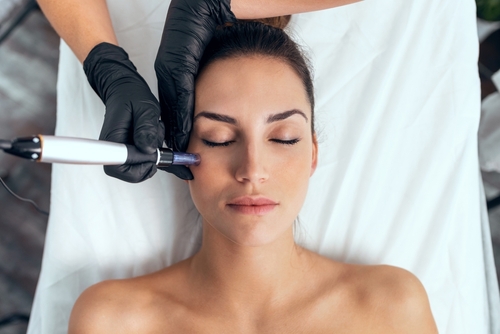 We begin at the surface because a healthy epidermis enhances everything that follows. Medical-grade skincare—vitamin A derivatives, antioxidants, and pigment modulators—sets the tone, supported by light to medium chemical peels, micropeels or microdermabrasion, and occasional short-pulse laser toning when indicated. Patients typically notice a quicker glow and a more even tone within one to three weeks. “Polish and protect first,” Dr. Shatkin explains. “When the skin barrier is optimized, every subsequent modality performs better and recovers faster.”
From there, we move into the dermis to rebuild the scaffold. Microneedling—with or without biostimulatory adjuncts—fractional resurfacing, and RF-based collagen stimulation drive gradual remodeling for fine lines and mild laxity. We sequence carefully for those with pigment concerns: first calm melanin with skincare and peels, then stimulate collagen to minimize the risk of post-inflammatory pigmentation. “Collagen doesn’t clock in overnight,” Dr. Shatkin notes. “Expect progressive improvement over eight to twelve weeks as new fibers mature. It’s like renovating the framework behind the walls.”
Volume and contour come next. Midface deflation, perioral changes, and jawline blunting are addressed with hyaluronic acid fillers for shape and detail and biostimulatory agents for deeper, longer-term support in appropriate candidates. Here, restraint matters. “Replace the frame before you retouch the picture,” says Dr. Shatkin. “Subtle midface support often softens nasolabial folds and transitions under the eyes without overfilling.” For higher-risk anatomy or revision cases, we incorporate ultrasound guidance and conservative staging to maximize safety.
Finally, we refine motion and lift vectors. Neuromodulators soften dynamic lines across the glabella, forehead, and crow’s feet, and help balance lower-face animation. For mild to moderate laxity, energy-based tightening is mapped to a patient’s specific vector pattern; for advanced laxity, we discuss surgical options. “We don’t chase lines—we manage motion and support,” Dr. Shatkin says. “Sometimes a touch of neuromodulator plus targeted tightening preserves natural expression while sharpening the jawline and neck.”
Because life and calendars are real, every plan is built around downtime, budget, and safety. When appropriate—for the right Fitzpatrick types—we consolidate downtime by pairing light peels with microneedling; when inflammation or PIH risk is higher, we stage. Budgets are managed modularly: start with skincare and peels for global wins, then add collagen stimulation, then volume. “Sequencing makes excellence accessible,” Dr. Shatkin emphasizes. “You don’t need to do everything at once to look meaningfully better.” Safety underpins each step: medical history, skin type, medications, and prior procedures guide settings, products, and intervals, and informed consent covers rare but real risks such as PIH, vascular events with fillers, scarring, and HSV reactivation after resurfacing. “Anatomy first, always,” he adds. “Beautiful results are worthless if we aren’t meticulously safe.”
What might this look like in practice? For a “Refresh Weekend,” we focus on low-disruption gains: a light peel with micropeel for glow and tone, plus neuromodulator touch-ups, followed by a short series of microneedling sessions over the next four to eight weeks. Daily retinoid, antioxidants, and sunscreen maintain momentum. “It’s the nudge your skin needs to look rested without broadcasting that you did anything,” says Dr. Shatkin.
A more structured “Texture + Tighten 90 Days” plan starts with pigment control and a fractional or microneedling treatment, adds jawline and neck RF tightening around month two (with midface HA support if indicated), and fine-tunes at month three with a maintenance peel and neuromodulator. Improvements consolidate over three to six months as collagen matures.
For patients needing broader structural change plus skin quality, our “Lift & Glow (Comprehensive)” protocol stages deep filler support, energy-based tightening to the proper vectors, fractional resurfacing for texture, and ongoing pigment control—with surgical consultation when anatomical laxity exceeds nonsurgical range. “The art is matching the layer and the timing to the person in front of us,” Dr. Shatkin explains. “There’s no one-size-fits-all face.”
Every patient journey at Aesthetic Associates Centre includes a layer-by-layer assessment—from surface health to deep support—standardized photos, and ultrasound mapping when helpful. We provide a written roadmap that clarifies what happens now, what stacks well, and what’s better staged. Milestones at six, twelve, and twenty-four weeks track collagen response so we can adjust course intelligently. Maintenance is built in: quarterly peels or light energy, a personalized neuromodulator cadence, and seasonal skincare edits to protect your investment. “Longevity isn’t luck,” Dr. Shatkin says. “It’s maintenance done right.”
In the end, our message is straightforward: treat the right layer at the right time. “Layered rejuvenation delivers the most natural, durable results,” concludes Dr. Shatkin. “Our team designs plans that respect your anatomy, your timeline, and your goals—grounded in science, executed with artistry, and always anchored in safety.”
Aesthetic Associates Centre • Layered Plans at a Glance
| Plan | Ideal Timeline | Core Steps & Sequencing | Downtime | Expected Results | Dr. Shatkin’s Note |
|---|---|---|---|---|---|
| Refresh Weekend | Day 1, then Weeks 4–8 | Light peel + micropeel for glow/texture → neuromodulator touch-ups → short series of microneedling sessions over 4–8 weeks; daily retinoid, antioxidants, sunscreen | Minimal; social downtime only | Brighter tone, smoother texture, softened lines; quick visible glow in 1–3 weeks | “It’s the nudge your skin needs to look rested without broadcasting that you did anything.” |
| Texture + Tighten 90 Days | 3 months (monthly milestones) | Month 1: Pigment control (topicals/peel) → fractional or microneedling treatment. Month 2: Jawline/neck RF tightening; add HA midface support if indicated. Month 3: Maintenance peel + neuromodulator refinement |
Staged, short recoveries after energy/fractional sessions | Collagen gains and contour definition consolidate over 3–6 months as collagen matures | “We time each layer so improvements stack and last.” |
| Lift & Glow (Comprehensive) | Staged plan (customized) | Deep filler support for structure → energy-based tightening to correct vectors → fractional resurfacing for texture → ongoing pigment control; surgical consult if laxity exceeds nonsurgical range | Variable; coordinated to goals and calendar | Global rejuvenation across layers: structure, texture, tone, and lift | “The art is matching the layer and the timing to the person in front of us—there’s no one-size-fits-all face.” |
BLOG CATEGORIES
Botox Fillers Chemical Peels Morpheus8 Microneedling Laser Treatment Facials MedSpa Tattoo Removal Weight Loss Plastic Surgery