




If you spend any time on TikTok or Instagram, you may have seen the latest do-it-yourself beauty trend being called “homemade Botox.”
The recipe is surprisingly simple: flaxseeds are mixed or cooked with water to create a thick gel, which is then applied to the face and allowed to dry. Some versions also add olive oil. Social media videos show users demonstrating tighter, smoother-looking skin and suggesting the treatment may provide results similar to Botox® injections.
So, is there something to it?
Yes—and no.
The flaxseed mask may temporarily make the skin look and feel tighter. But calling it “homemade Botox” is misleading because it works in an entirely different way from injectable botulinum toxin.
Why Does the Flaxseed Mask Make the Skin Feel Tight?
Flaxseeds release a naturally occurring, gel-like substance called mucilage when they are mixed with water. When this gel is placed on the skin and dries, it creates a thin film across the surface of the face. As that film dries and contracts, the skin can temporarily feel tighter. It may also make very fine lines appear smoother.
Think of it more like an instant-tightening facial mask than a wrinkle treatment.
Once the mask is washed away—or the film begins to loosen—the tightening effect disappears.
There is no evidence that this type of mask permanently tightens the skin, significantly remodels collagen, or produces lasting wrinkle reduction.
Why It Is Not Botox
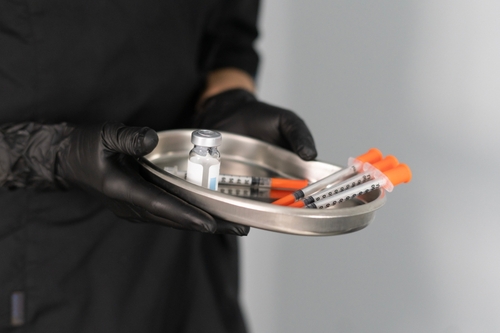
Botox Cosmetic and other FDA-approved botulinum toxin products work beneath the skin.
When precisely injected into selected facial muscles, botulinum toxin temporarily interferes with the release of acetylcholine, the chemical signal that causes muscles to contract.
By reducing the activity of specific muscles, wrinkles caused by repeated facial movement become less noticeable.
These are known as dynamic wrinkles, including:
- Crow’s feet around the eyes
- Frown lines between the eyebrows
- Horizontal forehead lines
A flaxseed mask does none of this. It does not reach the facial muscles, affect the neuromuscular junction, or reduce muscle contraction. So, although someone’s forehead might appear smoother immediately after removing a dried flaxseed mask, the biological mechanism bears essentially no resemblance to Botox treatment.
Homemade “Botox” vs. Botox Cosmetic
| Flaxseed “Homemade Botox” | Botox Cosmetic |
|---|---|
| Applied to the skin | Injected into targeted muscles |
| Creates a temporary surface film | Alters communication between nerves and muscles |
| May temporarily make skin feel tighter | Temporarily reduces muscle contraction |
| Does not treat the cause of dynamic wrinkles | Specifically treats dynamic wrinkles |
| Effect may last hours | Results generally last several months |
| No established Botox-like effect | Extensively studied medical treatment |
Does Flaxseed Have Any Benefits for Skin?
This is where the social media trend becomes a little more interesting.
Flaxseed contains fatty acids, antioxidants, and other compounds that may have beneficial properties for the skin. Flaxseed-derived products have been investigated for hydration and skin-barrier benefits.
That doesn’t mean a homemade flaxseed mask is useless.
- Someone may enjoy:
- Temporary skin smoothing
- A feeling of firmness
- Increased surface hydration
- A relatively inexpensive at-home facial treatment
The problem isn’t necessarily the mask. The problem is calling it Botox.
A temporary cosmetic film on the surface of the skin should not be confused with a medication that changes muscle activity at the neuromuscular junction.
The Bigger Lesson: Don’t Confuse an Immediate Effect With a Biological Treatment
Social media is exceptionally good at demonstrating immediate before-and-after results.
But immediate doesn’t necessarily mean effective in the long term.
Many topical products temporarily hydrate the outer layers of skin, reflect light differently, create a tightening film, or reduce the appearance of fine lines. Those effects can be real while still being temporary.
In aesthetic medicine, we need to ask a different question:
What is actually happening biologically?
If the goal is dynamic wrinkle reduction, injectable neuromodulators such as Botox work by decreasing targeted muscle activity.
If the goal is skin texture, pigmentation, collagen stimulation, laxity, or volume restoration, completely different treatments may be appropriate. That is why identifying the cause of an aging concern is much more useful than simply chasing the newest viral treatment.
The Bottom Line
The viral flaxseed “homemade Botox” trend isn’t really Botox at all.
A dried flaxseed gel can create a temporary film over the skin that produces a tightening sensation and may briefly make fine lines appear smoother. If you enjoy it as a facial mask, that’s one thing.
But it should not be expected to:
Relax facial muscles, eliminate dynamic wrinkles, permanently tighten skin, or reproduce the results of injectable botulinum toxin.
When evaluating any social-media beauty trend, remember one simple rule: A good before-and-after video doesn’t necessarily demonstrate a good medical treatment. Understanding why something appears to work is the first step toward making a SMART aesthetic decision.
At Aesthetic Associates Centre, we can help you sort through those differences and identify options that make sense for your skin and your goals. Schedule your consultation and make your next aesthetic decision a SMART one.
This article is for educational purposes and is not a substitute for an individualized medical evaluation or treatment recommendation.

BLOG CATEGORIES
Botox Fillers Chemical Peels Morpheus8 Microneedling Laser Treatment Facials MedSpa Tattoo Removal Weight Loss Plastic Surgery